Bringing consistency to a complex product, mid-flight.
Client
Syntracts · App
Year
2025 & 2026
The Syntracts app is a B2B SaaS platform for AI-powered contract data extraction — used by legal, finance, procurement, and operations teams to query, validate, and act on contract data at scale.
I was brought in mid-project to improve consistency across the existing design and extend it into new flows. The product had grown fast, and the interface needed a designer to establish clearer patterns, tighten the visual language, and make sure new features felt like they belonged to the same product.
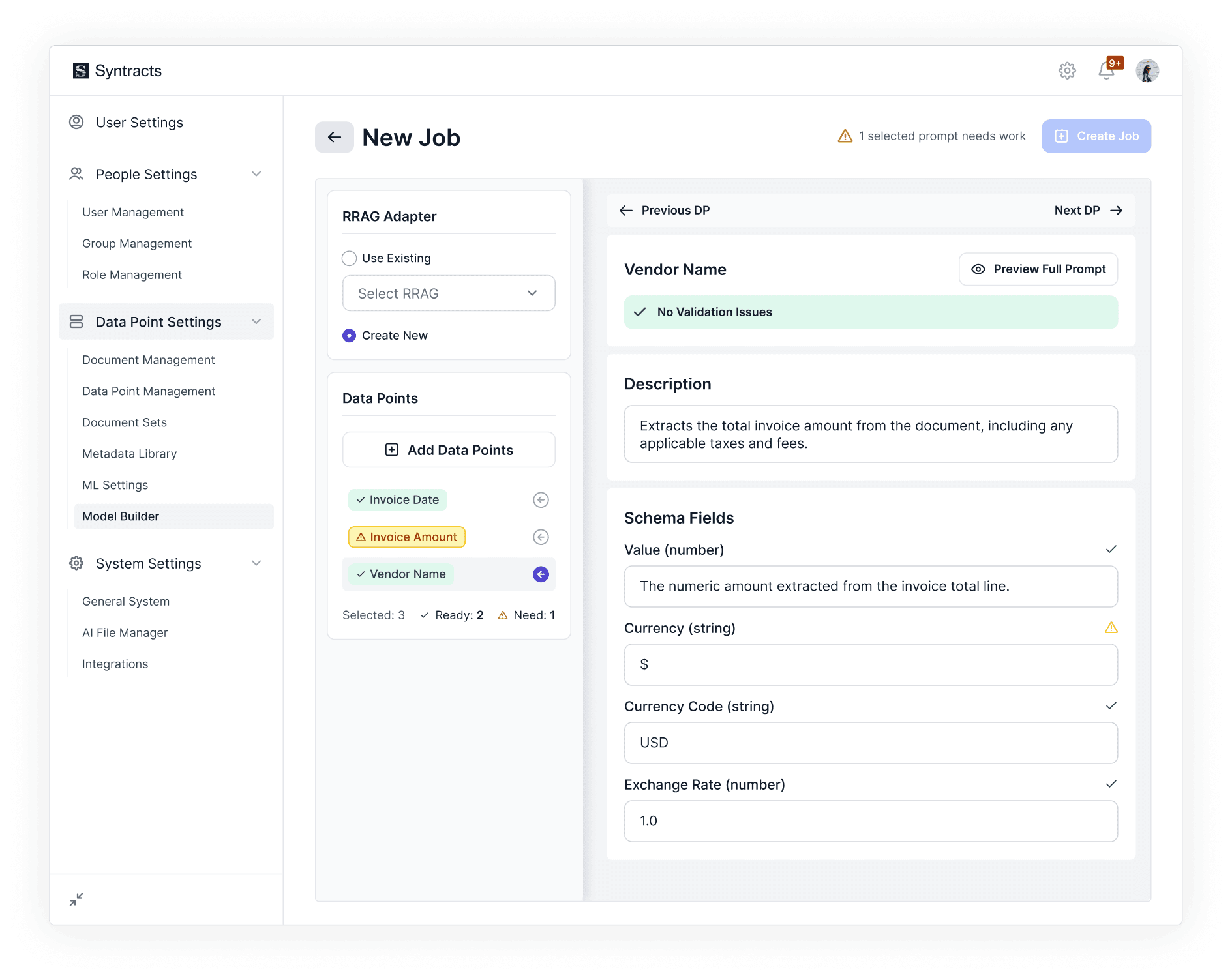
My work spanned the full application: the data extraction job builder with its RRAG adapter configuration and schema field definitions, people and permissions management, system settings and the general health dashboard, and several other flows across the product. For areas I redesigned, I worked from the existing screens — identifying inconsistencies, proposing improvements, and aligning with the engineering team on what was feasible.
The result is a more coherent product: one where the patterns are predictable, the density feels intentional, and new users can navigate a technically complex tool without needing a manual.
Scope of Work
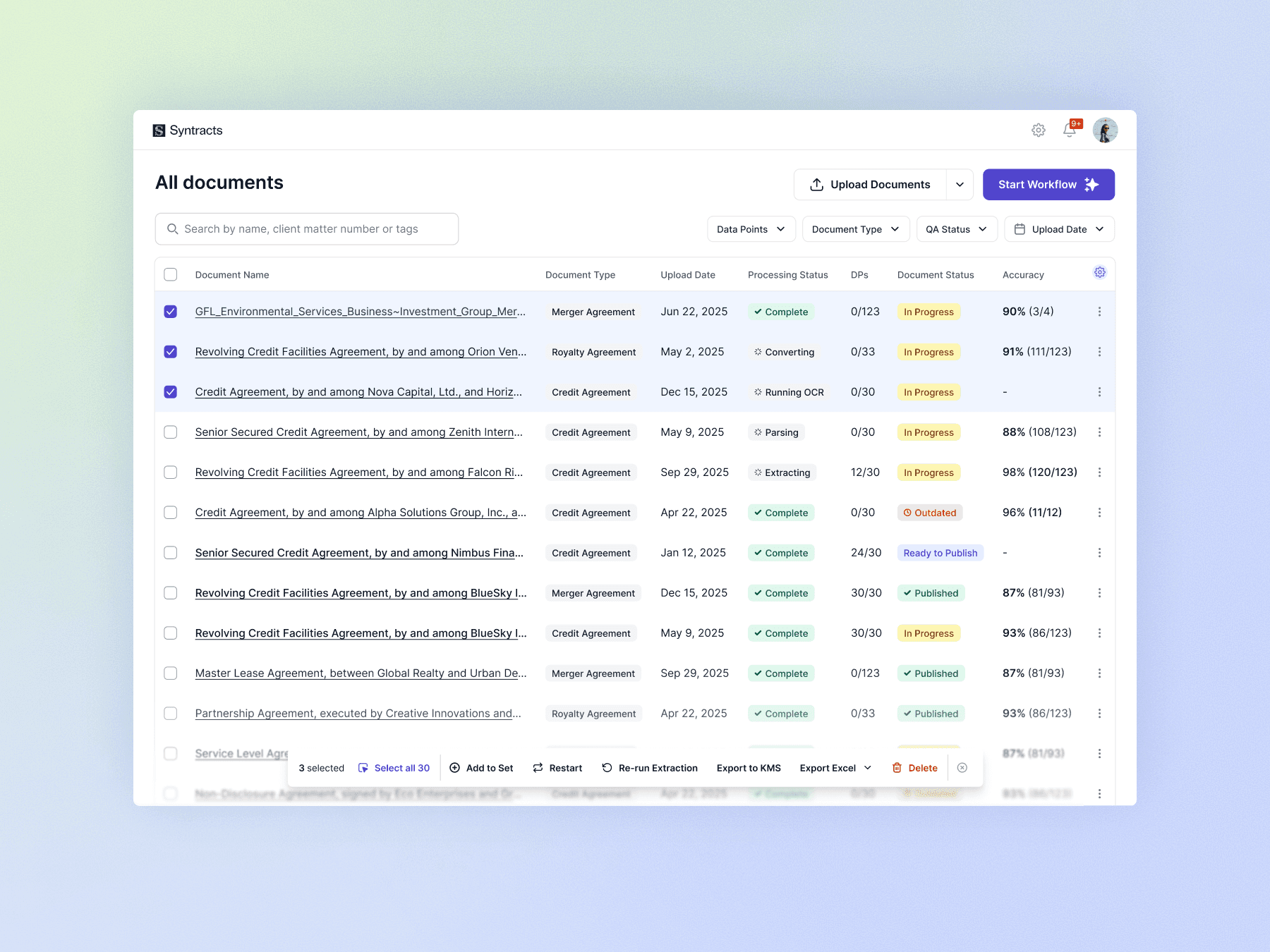
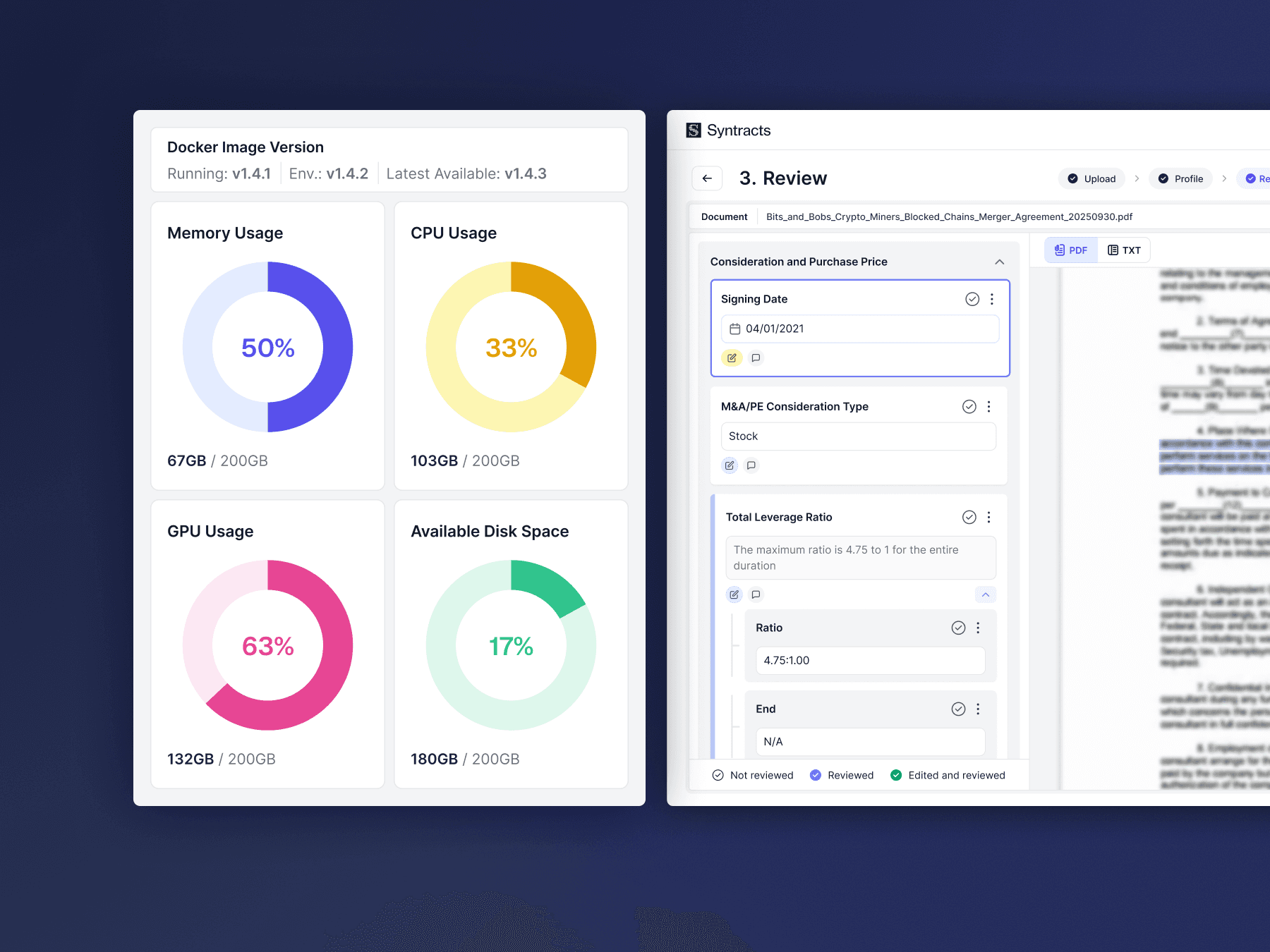
Visual Consistency
Design system
One shared language across a technically complex product. Components that behave the same way everywhere — so users stop thinking about the interface and focus on the work.
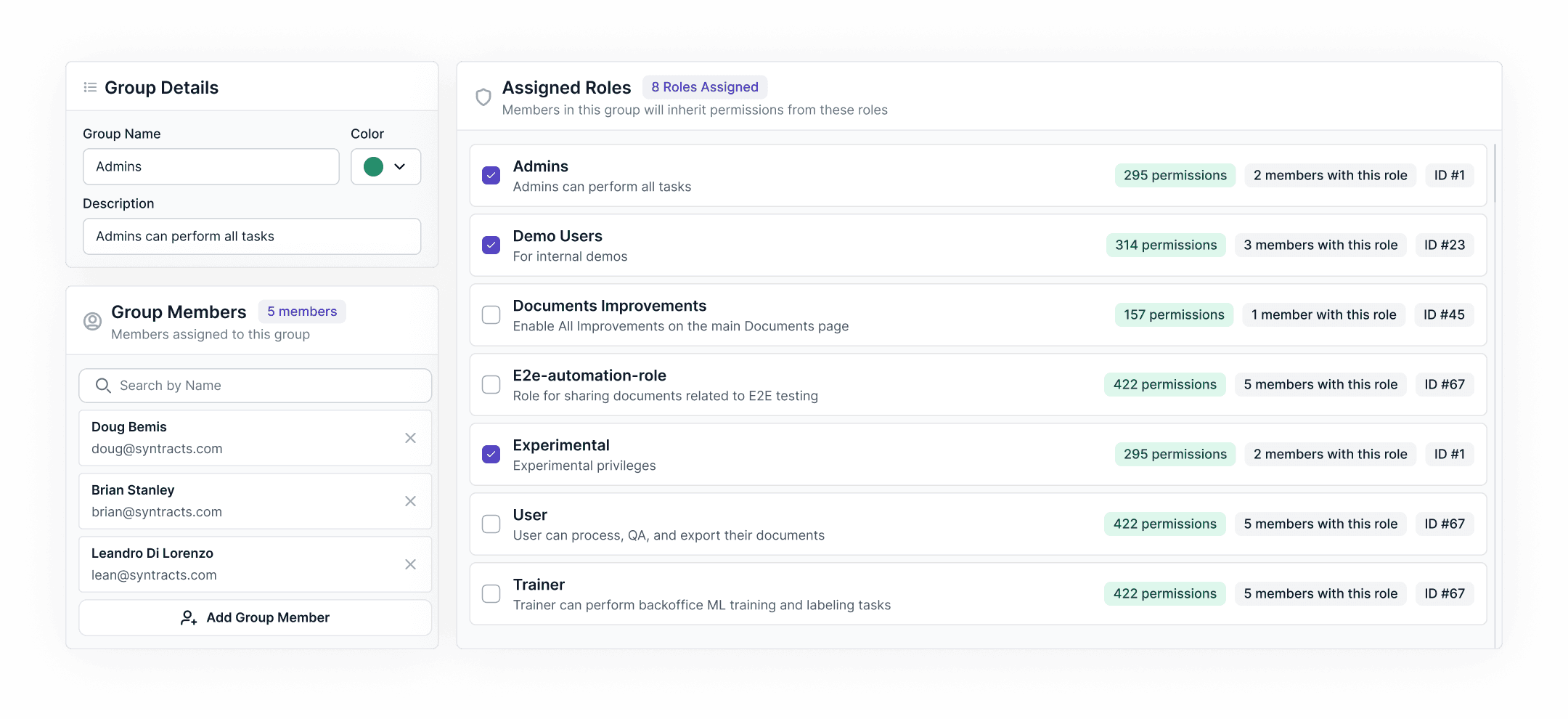
User-centric Design Decisions
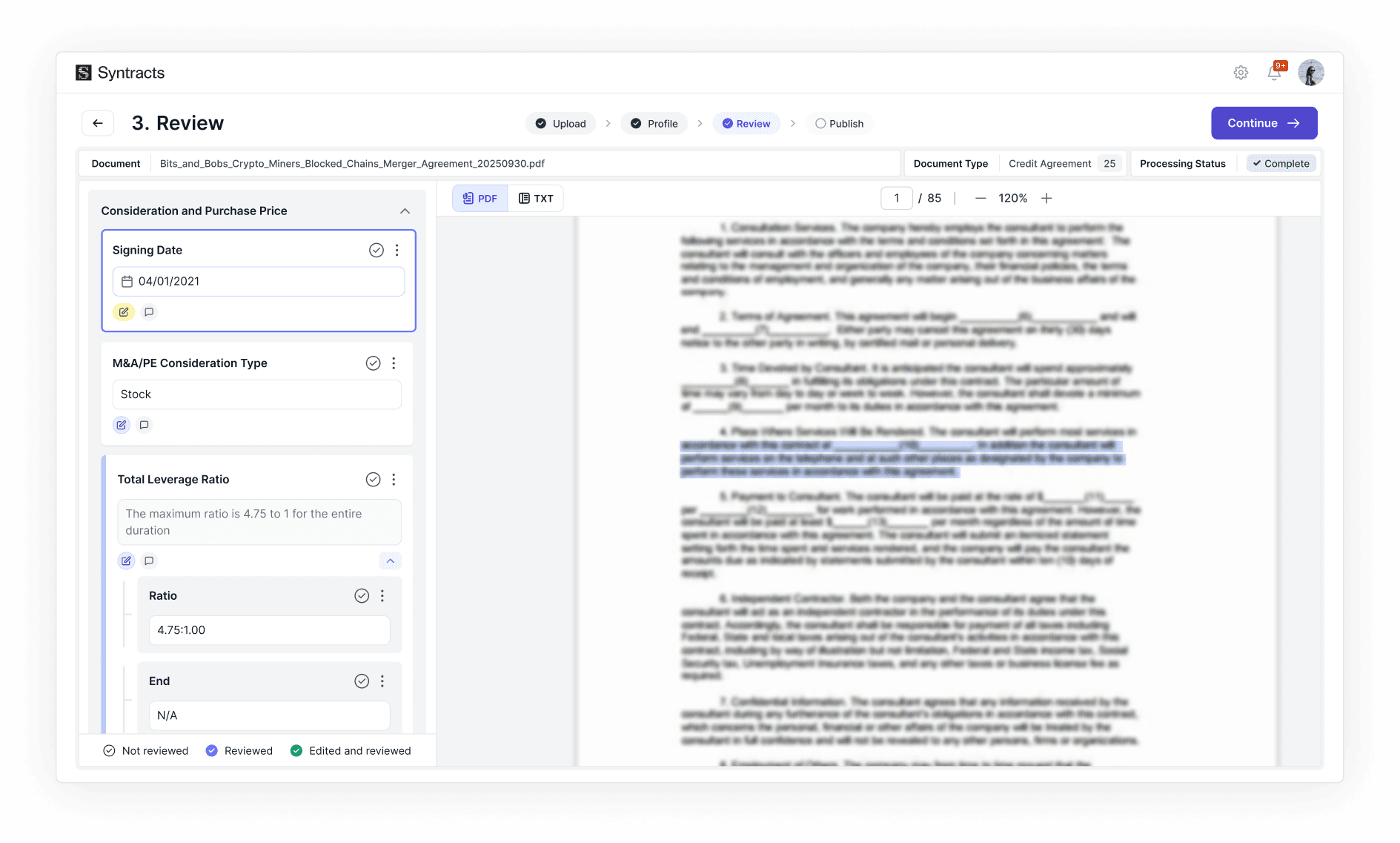
The validation view
The core of the lawyer's workflow. A side-by-side interface where extracted data points are reviewed against the source document — checking accuracy, catching discrepancies, approving or flagging outputs before they move forward.
This is where trust in the product is earned or lost. A junior lawyer under pressure needs to move through this fast and confidently. The design had to make comparison effortless, errors unmissable, and actions unambiguous.
The job builder
The setup flow — where users define what to extract, configure adapters, and set up schema fields. Important, but a means to an end. The validation view is where the real work lives.
Stakeholder sessions
Weekly reviews with the team to test flow options against real use cases. Decisions grounded in how lawyers actually work, not how we imagined they might.
Constant Iteration
Built with engineers
Design reviews weren't a final step — they were part of the process. Consistency checks on developed features, adjustments based on real constraints, refinements that kept intent and implementation aligned.
Tighter component behaviour.
Clearer feedback states.
A product that felt like it was made by one team, not assembled over time.
